
Many organizations believe they’re protected simply because they have a backup. The assumption is understandable, but it’s also where risk quietly builds. A backup that exists, but doesn’t work when needed, offers little real protection. There’s a long-standing principle used in risk planning and engineering that applies directly to data protection: two is one, and one is none.
In practical terms, if you only have one copy of something and it fails, you effectively have zero. Modern backup strategies are built around this idea; not to add complexity, but to remove false confidence.
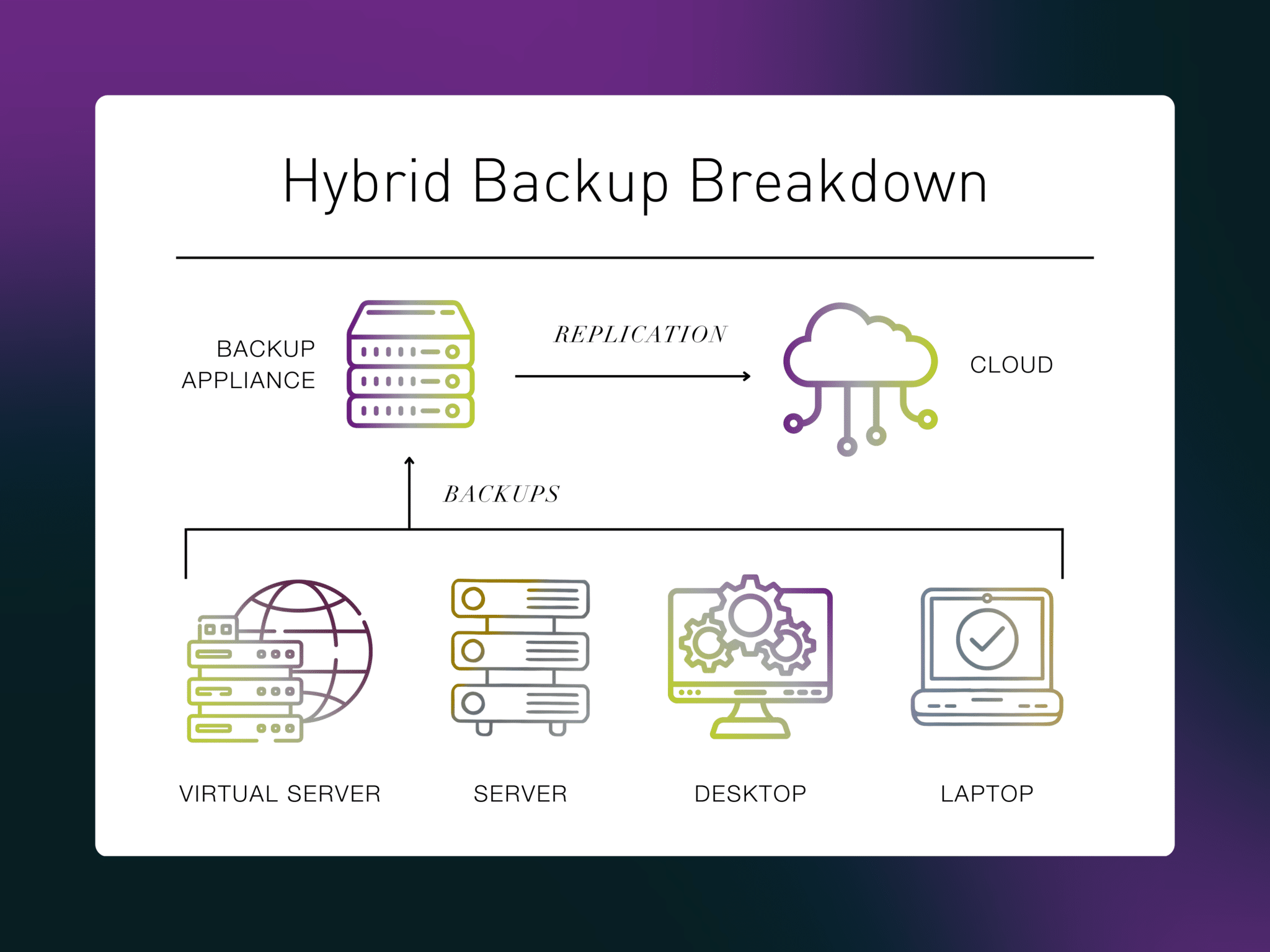
Hybrid backup continues to win because it acknowledges how failures actually occur and designs around them, rather than assuming systems will behave perfectly.
The Core Principle Behind Redundancy
Hardware fails. Systems require maintenance. Providers experience outages. Data corruption often goes unnoticed until it’s too late. A single backup, no matter where it lives, is still a single dependency. True resilience comes from spreading risk across systems and locations so that when something breaks, operations can continue without scrambling for options.
This matters even more as organizations rely on SaaS platforms and identity services like Microsoft 365, Salesforce, and environments governed by Microsoft Entra ID. These platforms are critical to daily operations, but they are not immune to outages, misconfigurations, credential compromise, or accidental data loss.
How This Shows Up in Backup Strategy
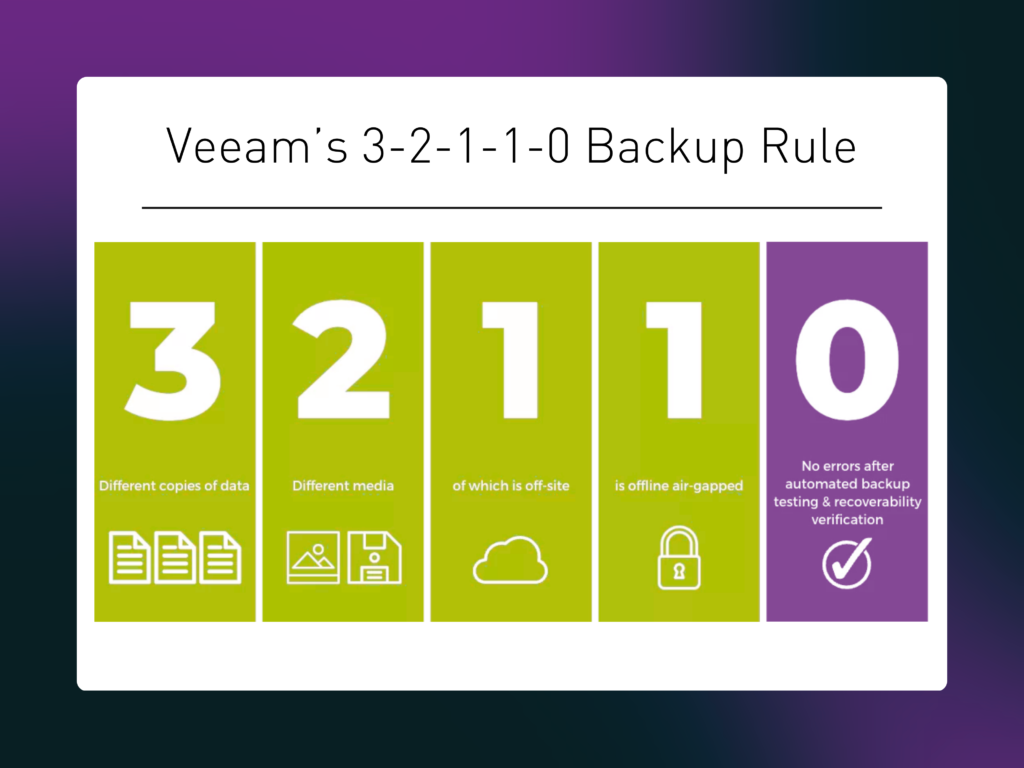
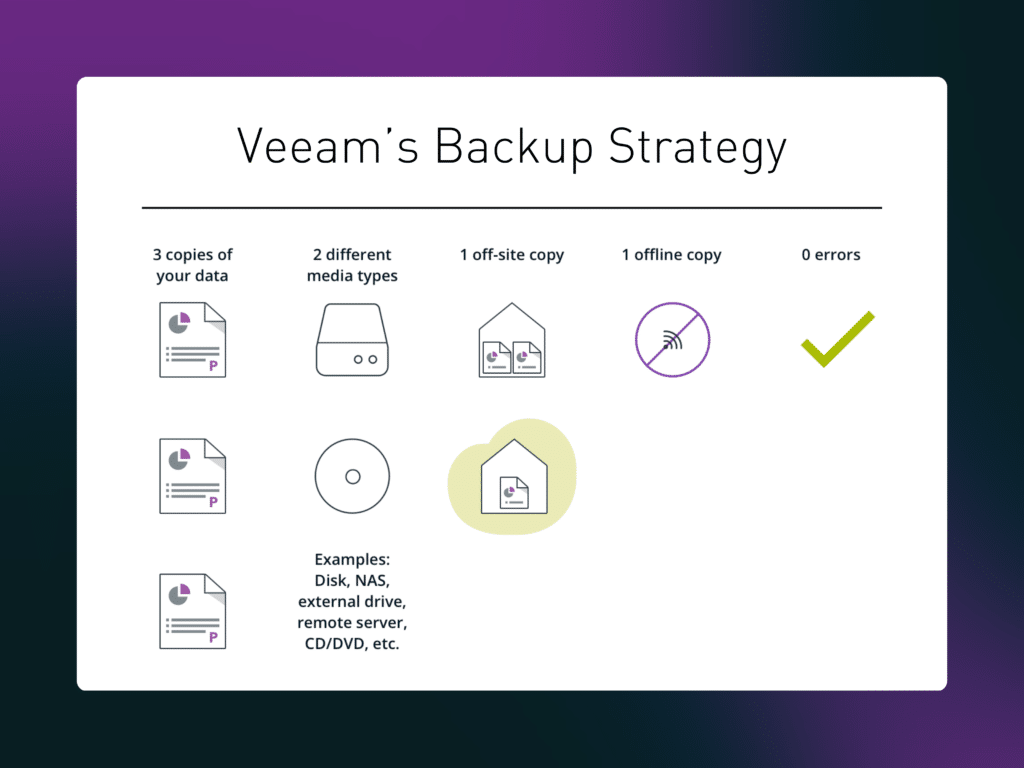
The industry’s long-standing 3-2-1 backup rule was created for this exact reason. By maintaining multiple copies of data, stored on different media types with at least one copy kept off-site, organizations reduce the chance that a single event wipes everything out. It’s a practical framework that still holds up well today.
However, modern threats have forced the model to evolve. Ransomware doesn’t just delete data anymore. It often encrypts or corrupts it gradually, sometimes long before anyone realizes there’s an issue.
That’s why many organizations now follow the 3-2-1-1-0 approach, which adds immutability and verification into the equation. An immutable backup can’t be altered or encrypted, and verification ensures backups are actually usable.
Why Hybrid Backup Wins for Most Organizations
Hybrid backup works because it removes the assumption that any single environment is immune to failure. On-prem-only backups depend entirely on a physical location. Cloud-only backups depend on a single provider. Hybrid backup distributes data across environments, reducing reliance on any one system.
Most organizations already operate in a hybrid reality. They have on-prem servers, cloud workloads, Microsoft 365 data, and critical files spread across multiple platforms. Hybrid backup aligns with that reality instead of forcing everything into a single model. For most businesses, it provides a more balanced, resilient approach that fits how their infrastructure actually works.
A Backup Isn’t Useful Unless It Works
One of the most common gaps in backup strategy is assuming that successful backups equal successful recovery. Backup software will copy data regardless of its condition. That includes corrupted files, ransomware-encrypted data, and systems that won’t boot or authenticate.
This risk extends beyond servers and storage. If identity systems like Entra ID or application data in platforms like Salesforce are compromised, organizations may regain access to infrastructure but still be unable to operate without clean, recoverable data and configurations.
Without testing and validation, these problems often remain hidden until a restore is urgently needed. At that point, the cost of discovery is high. That’s why resilient backup strategies include verification steps such as recovery testing, system validation, and security checks… Long before a real incident occurs.
The goal is to remove uncertainty. Instead of hoping recovery will work, organizations can be confident that it will.
Where VDC Fits In
Virtual Systems’ VDC platform is designed to support redundancy from the ground up. It protects data across on-prem, hybrid, and cloud environments while enabling off-site and immutable copies. Just as importantly, it supports verification and testing.
That includes protecting critical SaaS data and identity-driven environments, ensuring platforms like Microsoft 365, Salesforce, and Entra ID are not single points of operational failure.
Rather than relying on a single system or provider, VDC helps organizations build a backup strategy that assumes failure and plans for it accordingly. That’s how resilience is built into the infrastructure rather than added later as a reaction.
A resilient data protection strategy accepts risk as a constant and designs systems that keep businesses running despite it. Hybrid backup does precisely that: quietly, reliably, and without unnecessary complexity.
To learn more about VDC and how it can make your environment more secure, please contact us here!
Share
Resources + Updates