
“Data resilience” has quickly become one of the most overused phrases in IT conversations. Everyone claims it. Few clearly explain what it actually means or why it matters to the business.
As we head into 2026, data resilience is no longer about simply having backups. It’s about confidence. Confidence that your data exists, that it’s accurate, and that it can be recovered quickly enough to keep the business running when something goes wrong.
At Virtual Systems, we see data resilience not as a buzzword, but as a core business capability.
What Data Resilience Actually Means
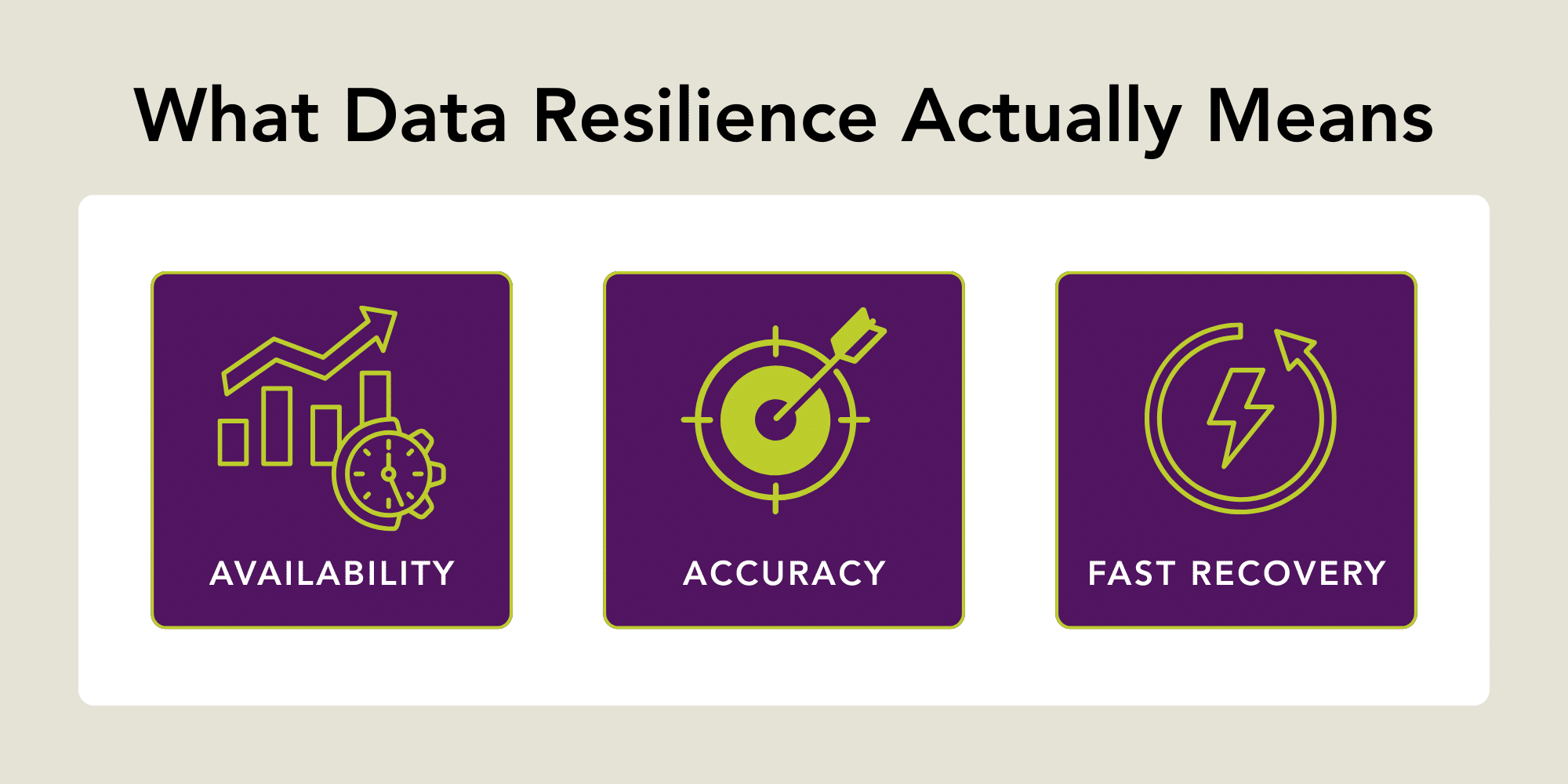
At its core, data resilience is an organization’s ability to protect, maintain, and restore data during and after disruptions. A resilient data environment ensures:
- Data remains available when it’s needed
- Information is accurate and uncompromised
- Recovery is predictable, tested, and fast
As Chris Gates, Director, Sales & Marketing at Virtual Systems, explains:
“Data resilience is having confidence that your data not only exists, but that it can be accurately recovered in the event of a failure.”
Why Data Resilience Is a Business Continuity Issue
Data resilience is often framed as an IT concern, but its impact is felt across the entire organization.
When data systems fail, the consequences aren’t abstract:
- Applications go offline
- Teams lose access to critical information
- Customers experience service disruptions
- Revenue and reputation take a hit
A resilient data strategy helps ensure critical applications and services remain available, even during outages, attacks, or infrastructure failures. It allows organizations to continue operating through disruptions rather than scrambling to recover after the fact.
In practical terms, resilience supports business continuity.
Backup Alone Is No Longer Enough
Traditional backup strategies were designed for a simpler era. Data was backed up, stored, and rarely revisited unless something went wrong. Today’s environments are more complex:
- Hybrid and distributed infrastructure
- Tighter recovery time expectations
- Growing regulatory pressure
- Increasingly sophisticated cyber threats
Modern resiliency requires redundancy, replication, isolation, and testing. And all of these things need to be working together to reduce downtime and limit data loss. Resilient architectures are built to minimize:
- Recovery Time Objectives (RTO), or how long systems are down
- Recovery Point Objectives (RPO), or how much data is lost
Protecting Against Cyberattacks and Human Error
Ransomware, malware, and accidental deletions remain some of the most common (and costly) causes of data disruption.
A strong data resiliency strategy mitigates these risks by:
- Maintaining secure, immutable, or isolated copies of data
- Preventing attackers from encrypting or corrupting backups
- Allowing organizations to restore clean data without paying ransoms
This approach shifts recovery from a high-stress, high-risk event into a controlled process. Instead of asking if data can be restored, teams know how and how fast recovery will happen.
The Role of AI in the Future of Data Resilience
One of the most significant shifts heading into 2026 is how AI is being applied to backup and data protection platforms. Historically, backup data was difficult to index and even harder to search. Today, AI-driven tools are changing that reality by allowing organizations to:
- Query backup data for sensitive information like PII or credit card numbers
- Identify compliance risks proactively
- Understand what data would be exposed in a breach
- Locate historical files tied to former employees, outdated systems, or old policies
Backup data is now becoming searchable, auditable, and actionable. That capability transforms backup environments into an asset for security, compliance, and governance.
Compliance, Risk Reduction, and Long-Term Cost Savings
Many regulatory frameworks require organizations to demonstrate reliable data protection, availability, and recovery. Data resilience supports these requirements while reducing legal, financial, and reputational risk. Beyond compliance, resilience delivers operational benefits:
- Better data management and documentation
- Clear recovery processes across teams
- Reduced chaos during incidents
- Lower long-term costs by avoiding extended outages
While resilience requires investment, the cost of prolonged downtime or unrecoverable data is almost always higher.
Resilience is About Preparedness, Not Fear
The purpose of data resilience isn’t to create anxiety; it’s to create clarity. When resilience is built intentionally:
- Downtime is shorter and less disruptive
- Data loss is minimized
- Recovery is predictable
- Leadership can make informed decisions under pressure
As we move into 2026, organizations that treat data resilience as a foundational capability will be better positioned to adapt, recover, and grow.
At Virtual Systems, our focus is on helping organizations build resilience that’s practical, tested, and aligned with how businesses actually operate today. To explore how we can make your environment more resilient, get started here.
Share
Resources + Updates